


Summary
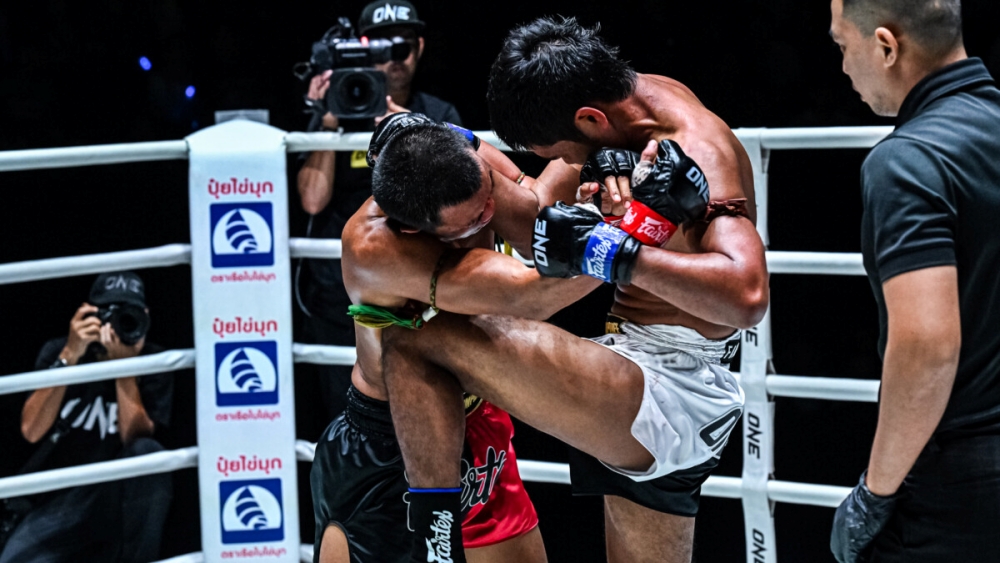
While Muay Thai is known for its kicks, punches, elbows, and knees, not all styles focus on long-range striking. The Muay Plam is a style that thrives in the clinch, where fighters stay chest to chest, fight for grips, and use leverage to wear down and dominate opponents.
Muay Plam focuses on clinching, off-balancing, and breaking an opponent’s posture before striking. Fighters who specialise in Muay Plam use strong grips, constant pressure, and body manipulation to dominate inside the clinch.
This guide explains what defines the Muay Plam style, how it works, the techniques that make it effective, and why it remains an important part of traditional Thai fighting culture.
Key Takeaways
- Muay Plam is a clinch-dominant style built on posture control, off-balancing, and close-range striking, such as knees and elbows.
- The style requires strong grips, hip positioning, and constant pressure, making it one of the most physically demanding forms of Muay Thai.
- Muay Plam fighters excel at breaking rhythm, controlling the inside space, and using clinch transitions to create high-scoring and high-impact moments.
What Is Muay Plam
Muay Plam translates roughly to grappling or wrestling within Muay Thai. It is the style that focuses on:
- Clinch Entries
- Inside Hand Fighting
- Posture Control
- Off-Balancing
- Sweeps And Dumps
- Strong Knees And Short Elbows
This style is often confused with Muay Khao, which focuses heavily on knee strikes. Muay Plam includes knees but adds more emphasis on clinch control, sweeps, and transitions.
In Muay Plam, the goal is not only to strike but also to dominate the clinch so convincingly that the opponent loses energy, balance, and scoring opportunities.
How Muay Plam Differs From Muay Khao
Muay Khao focuses on knees as the main weapon. Muay Plam focuses on controlling the opponent in the clinch.
A Muay Khao fighter can fight both at mid-range and in the clinch, but a Muay Plam fighter prefers to stay inside, tie up the opponent, and dominate with control and manipulation.
Where Muay Khao relies on striking endurance, Muay Plam relies on positional dominance.
Key Traits Of Muay Plam Fighters
- Strong Clinch Positioning: Muay Plam fighters prioritise inside control. They pummel for dominant grips and keep their heads, shoulders, and hips aligned to control the opponent’s movement.
- Constant Forward Pressure: These fighters do not allow opponents to create space. They walk forward, lock the clinch, and wear them down.
- Posture Breaking: Pulling the head down, lifting the chin, or turning the shoulders helps remove the opponent’s striking power.
- Powerful Knees And Short Elbows: Inside striking is the main scoring weapon in this style. Knees to the body and elbows in tight spaces are used to break rhythm.
- Efficient Sweeps And Dumps: Muay Plam experts excel at turning the opponent and tripping them off balance. This is key in scoring and controlling high-level fights.
Techniques That Define Muay Plam
- Double Collar Tie Control: Used to pull the opponent’s posture down and set up knees.
- Inside Hand Pummeling: Essential for securing dominant clinch grips.
- Off-Balancing Turns: Turning the opponent to expose their side or back helps create openings for sweeps or knees.
- Hip Positioning For Knees: Muay Plam fighters drive their hips forward to generate knee power from close range.
- Short Elbows In Tight Space: When an opponent blocks knees or tries to posture up, a short elbow can break their rhythm.
- Sweeps And Dumps: Techniques like inside trips, outside trips, and shoulder turns help score big and control momentum.
Why The Style Still Matters Today
Modern Muay Thai includes more movement and long-range striking, yet clinch dominance remains an important scoring factor. Learning Muay Plam helps fighters:
- Handle Aggressive Knee Fighters
- Neutralise Powerful Kickers
- Control The Pace Of The Fight
- Build Strong Balance And Stamina
It’s a style that ultimately rewards patience, physical control, and technical intelligence.
Final Thoughts
The Muay Plam is one of the purest expressions of close-range Muay Thai. It blends strength, balance, posture control, and subtle technique into a style that breaks opponents both physically and mentally.
Understanding Muay Plam gives a deeper appreciation for the clinch, which remains one of the most technical and demanding aspects of Muay Thai. Whether you are a beginner learning basic clinch grips or a competitor refining your inside game, studying this style adds depth and sophistication to your Muay Thai journey.
You may also like:
Muay Thai Defensive Combinations That Help You Block And Create Strong Counters

Summary Before Muay Thai became a unified national martial art, Thailand was home to several regional fighting styles. These styles were shaped by geography, culture, and the needs of local warriors. Muay Korat from the…
Summary Tawanchai PK Saenchai is one of the most electrifying Muay Thai fighters of this generation. Known for his sharp timing, smooth footwork, and devastating left kick, he has built a reputation as a calm…
Summary Muay Thai is known for powerful strikes, but defense is just as important. Good defense is not passive. It sets up counters, controls range, and keeps you calm under pressure. Defensive combinations in Muay…
Summary Your core is the foundation of your movement. Every strike you throw starts from the ground and transfers through your core before reaching your limbs. In Muay Thai, a strong core does far more…
Summary In Muay Thai, knees are used from close to mid range and are one of Muay Thai’s most devastating weapons. They can stop an opponent’s forward pressure, drain their stamina, or end a fight…
Summary In Muay Thai, elbows are called sok, and they are both versatile and devastating. They can be thrown from multiple angles, upward, downward, horizontal, and even spinning, making them a key tool in clinch…
Summary High-intensity training is known for pushing your heart rate up and delivering strong fitness results in a short amount of time. But many people who train consistently notice something else. Beyond physical benefits, many…
Summary Children learn best when they are curious, engaged, and free to explore. This is exactly why play-based learning works so well in martial arts training. Instead of relying only on repetition and structure, instructors…
Summary As more people look for ways to stay active, reconnect with nature, and step away from digital routines, 2026 offers many exciting outdoor activities to explore. From scenic walks and coastal adventures to team-based…
Summary Technical mastery in MMA doesn’t just rely on power. It’s also about timing, positioning, adaptability, and the ability to solve problems in real time. A technical fighter understands distance, timing, and transitions. They know…
Summary Scrambles are one of the most dynamic and unpredictable parts of wrestling. A scramble in wrestling occurs when both athletes lose or exchange control and must react quickly to regain dominant position. These moments…
Summary Over the weekend, in the boxing scene, Anthony Joshua delivered a decisive statement performance by stopping Jake Paul with a knockout in round six. The bout unfolded as a clash between elite heavyweight fundamentals…