


Summary
The Harai Goshi is a fundamental throw in judo and a highly effective takedown used in Brazilian Jiu-Jitsu and MMA. It is recognized for its smooth sweeping motion and the power that comes from proper hip rotation. Rather than relying on brute strength, the technique uses your opponent’s forward movement to create momentum before lifting and sweeping them over your hip.
This throw is often seen at high levels because it works against different body types and adapts well to both Gi and No-Gi situations. With the right hip placement, precise timing, and a strong sweeping leg, the Harai Goshi can send an opponent cleanly to the ground.
It remains one of the most reliable throws for both beginners and advanced grapplers, especially against opponents who drive forward with pressure.
Key Takeaways
- Harai Goshi works best when you break your opponent’s balance first and use their forward pressure to drive the throw, which makes timing more important than strength.
- Proper hip placement and a connected sweeping motion are the core of the technique. When your hips rotate smoothly and stay close, the throw becomes effortless.
- Harai Goshi creates natural transitions into dominant top positions in BJJ and MMA, making it a valuable standing technique that blends well with both Gi and No-Gi grappling styles.
What Is Harai Goshi
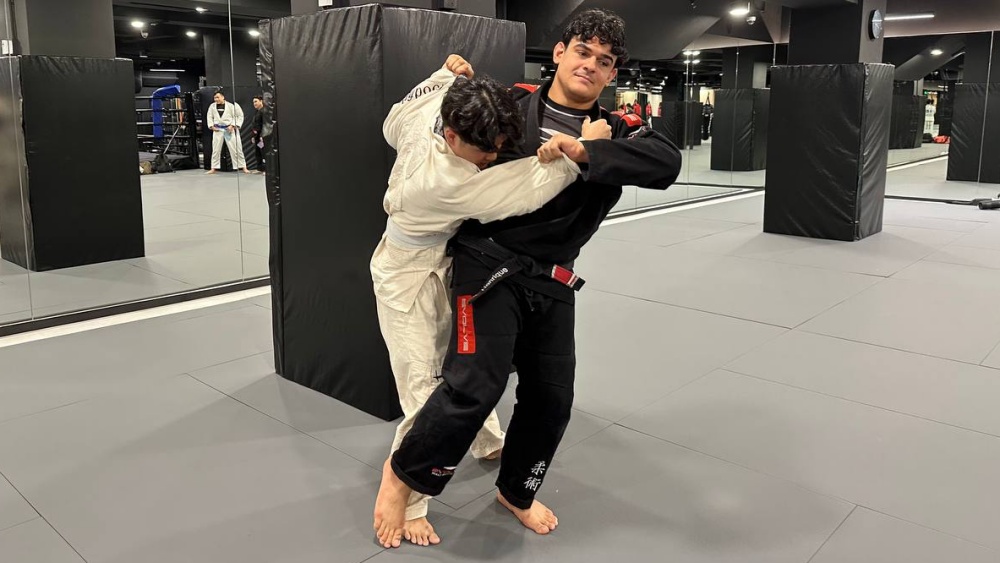
Harai Goshi translates to sweeping hip throw. The technique involves placing your hip slightly in front of your opponent’s hip while sweeping their leg with your own. As you rotate your body and pull with your grips, the sweeping motion lifts and turns the opponent, sending them to the ground.
Harai Goshi is a blend of timing, angles, and connection. When done correctly, it feels effortless, even against a heavier opponent.
When To Use Harai Goshi
Harai Goshi is most effective when:
- Your opponent steps forward aggressively.
- They shift weight onto their leading leg.
- You have strong grip control.
- You want to counter pushing pressure.
The throw works best when you redirect their momentum instead of forcing the lift.
Step By Step Breakdown Of Harai Goshi
- Establish Your Grips: In Gi settings, use a collar and sleeve grip or over the back grip. In No-Gi, use underhooks or over-unders. Good grip control is the foundation of the throw.
- Break Their Balance: Pull your opponent forward and slightly upward to get them onto their toes or front leg. This kuzushi (balance breaking) sets the throw in motion.
- Step In And Turn Your Hips: Step your lead foot between your opponent’s stance. Rotate your hips so your back is in front of their chest. Your hips should make strong contact with their body.
- Sweep The Leg: Extend your sweeping leg outward and upward along the back of your opponent’s leg. This motion lifts and redirects their weight.
- Rotate And Follow Through: Use your upper body to guide the opponent over your hip as your sweeping leg finishes the arc. Maintain grip control and follow them to the ground for a dominant landing position.
Common Mistakes In Harai Goshi
After learning how to execute the Harai Goshi, let’s look at some common mistakes grapplers face when attempting the throw:
- Poor Hip Placement: If your hips are too low or too far forward, the throw loses power.
- Trying To Muscle The Sweep: Power comes from timing and hip rotation, not leg strength.
- No Kuzushi Before Entry: Without breaking balance, the opponent can resist or step away.
- Sweeping Too Early: The sweep should happen only after the hips connect tightly.
- Standing Too Tall: Stay grounded so you can lift with control.
Variations Of Harai Goshi
1) Harai Makikomi
A rolling variation where you wrap your arm and fall with the throw, creating strong rotation.
2) Ushiro Harai Goshi
A rear sweeping hip throw where you enter from behind the opponent.
3) No-Gi Harai Goshi
This variant utilizes underhooks, body locks, and over-unders instead of Gi grips, making it extremely useful in MMA and No-Gi BJJ.
Each variation uses the same principles of balance, breaking, and hip-driven rotation.
How Harai Goshi Is Used In BJJ And MMA
In BJJ
- Creates openings to land in side control.
- Works well from a standing grip fighting.
- Helps transition into ground dominance quickly.
In MMA
- Effective transition from the clinch.
- Works with cage pressure.
- Enables fighters to take the fight down without having to go for a shooting takedown.
The throw is especially effective in close-range grappling exchanges.
Training Tips To Improve Your Harai Goshi
Consistency helps develop timing, which is the heart of Harai Goshi.
FAQs On The Harai Goshi
Q: Does Harai Goshi Work In No-Gi?
A: Absolutely. With strong underhooks or over-unders, the throw works well in both BJJ and MMA.
Q: Can Harai Goshi Be Used Against Bigger Opponents?
A: Yes. Because the throw relies on timing instead of strength, it works regardless of the opponent’s size differences.
Q: What Is The Most Important Part Of The Throw?
A: Hip placement and timing. If those are correct, the sweep becomes effortless.
Q: What Position Do You Land In After Harai Goshi?
A: Usually side control or a mount. But depending on the sport, you can adjust it accordingly.
Final Thoughts
The Harai Goshi is a powerful and elegant throw that works across judo, BJJ, and MMA. It blends balance breaking, hip rotation, and smooth sweeping motion into a technique that feels both controlled and dynamic. Whether you use it to counter pressure or as a primary takedown, the Harai Goshi opens pathways to dominant positions and teaches essential principles of timing, leverage, and movement. With consistent practice, it becomes one of the most effective tools in your throwing arsenal.
You may also like:
The Art Of BJJ Trips And How They Help You Control Opponents

Summary Whether you train BJJ or wrestling, the body lock takedown works well against a wide range of opponents. Instead of shooting for the legs, you secure tight control around the torso, use angles to…
Summary In Brazilian Jiu-Jitsu, a trip is a standing technique used to unbalance (Kuzushi) your opponent and take them down by targeting their legs. Unlike powerful judo throws that lift or launch an opponent, trips…
Summary A breakfall, known as ‘ukemi’ in Japanese martial arts, is one of the first techniques students learn in Brazilian Jiu-Jitsu. Instead of resisting a fall, you guide your body toward the mat and use…
Summary The Seoi Nage, also known as the shoulder throw, is one of Judo’s most iconic and widely practiced techniques. The name literally translates to “shoulder throw” (Seoi meaning “to carry on the back,” and…
Summary The penetration step is a fundamental wrestling movement used to close the distance and drive power into a takedown. It’s not just a forward step but a full-body motion that helps you shoot deep…
Summary Osoto Gari, meaning “major outer reap” in Japanese, is one of the most effective and widely used throws in grappling. Originally from Judo, it has become a staple in Brazilian Jiu-Jitsu because of its…
Summary In recent years, celebrity boxing and crossover fights have become common. Fans enjoy high-profile matchups, unusual pairings, and big personalities sharing the ring. Jake Paul has been at the center of this trend, taking…
Summary Enkh-Orgil Baatarkhuu has emerged as one of the most captivating figures in modern MMA. Drawing from his Mongolian roots and the country’s rich combat sports heritage, he has steadily built a name for himself…
Summary Modern MMA continues to evolve with fighters borrowing from different martial arts and adapting unique techniques to fit the sport. The snake kick is one of these creative strikes. It is not as common…
Summary Muay Thai is known for powerful strikes, but defense is just as important. Good defense is not passive. It sets up counters, controls range, and keeps you calm under pressure. Defensive combinations in Muay…
Summary December in Singapore is more than just shopping and parties, it’s a season filled with lights, markets, concerts, and opportunities to stay active and energized. From festive light-ups to holiday markets and even martial…
Summary Martial arts is not just about technique and conditioning. It also requires speed, timing, and the ability to generate power instantly. Explosive exercises help martial artists develop faster reactions, stronger strikes, sharper movements, and…