


Summary
The technical mount is one of the most effective control positions in Brazilian Jiu-Jitsu. It sits between the traditional mount and back control, offering strong balance, pressure, and access to multiple transitions. Instead of sitting square on top of your opponent, the technical mount angles your body to limit movement and reduce escape options.
This article explains what the technical mount is, why it works so well, and how it is used in modern BJJ.
Key Takeaways
- The technical mount offers a strong balance while limiting common mount escapes.
- It allows smoother transitions to back control, submissions, and striking control.
- Proper hip positioning and weight distribution matter more than pressure alone.
What Is The Technical Mount In BJJ
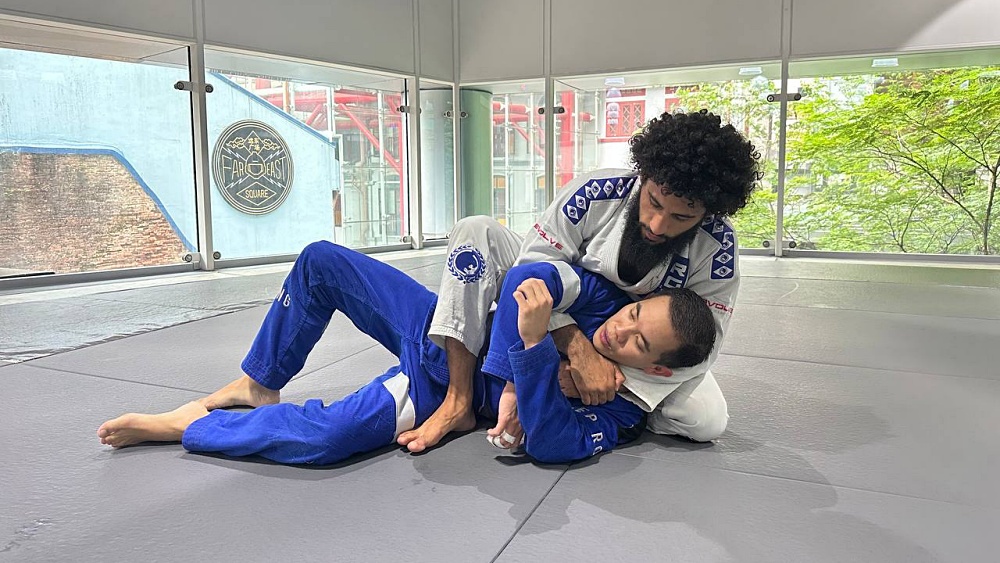
The technical mount is a variation of the traditional mount where your body is angled rather than square. One knee stays near the opponent’s hip while the other leg posts higher, often near the armpit or shoulder line. This angled position makes it harder for the opponent to bridge or trap both legs at once.
Unlike a standard mount, the technical mount emphasizes control and mobility rather than pinning pressure. It allows you to adjust your base quickly as the opponent moves.
Why The Technical Mount Is So Effective
Many mount escapes rely on strong bridges or trapping a leg. The technical mount disrupts both of these strategies. By angling your hips and widening your base, you reduce the opponent’s ability to generate force directly underneath you.
This position also keeps you mobile. Instead of committing all your weight forward, you remain balanced and ready to transition as soon as your opponent reacts.
Advantages Of The Technical Mount
- Harder To Off Balance: The wider base and angled hips make it difficult to sweep or reverse.
- Easier Transitions: Moving to back control, side control, or knee on belly becomes smoother.
- Maintains Top Pressure Without Stalling: You stay heavy while remaining mobile and responsive.
Key Elements Of A Strong Technical Mount
- Hip Angle: Your hips should face slightly toward the opponent’s head rather than square to their chest. This angle limits their ability to bridge evenly.
- Posted Leg: The posted leg provides balance and acts as a barrier against turning escapes. It should stay active and adjustable.
- Weight Distribution: Your weight should stay centered through your hips rather than leaning forward or backward.
- Upper Body Control: Head, arm, or shoulder control prevents the opponent from sitting up or turning into you.
Common Situations To Use The Technical Mount
- After A Mount Escape Attempt: When an opponent bridges hard and turns, shifting into the technical mount keeps you on top while regaining control.
- During Submission Attacks: Many submissions from the mount naturally lead to an angled base. The technical mount allows you to stay stable while attacking.
- As a Transition To Back Control: As the opponent turns to their side, the technical mount creates a clear path to the back.
Common Mistakes To Avoid
- Leaning too far forward and losing balance.
- Locking the posted leg without adjusting.
- Ignoring upper body control.
- Staying static instead of flowing.
The technical mount rewards awareness and movement rather than force.
Technical Mount Vs Traditional Mount
Traditional mount focuses on square pressure and pinning. The technical mount on the other hand, focuses on angle, balance, and transition. Both are important, but the technical mount often shines against experienced opponents who are skilled at escaping the standard mount.
Many advanced practitioners flow between both depending on the situation.
FAQs On The Technical Mount
Q: Is The Technical Mount Legal In BJJ Competitions?
A: Yes. It is fully legal and commonly used.
Q: Does The Technical Mount Score Points?
A: It is considered a mount variation and scores as a mount if control is established.
Q: Is Technical Mount Better Than Regular Mount?
A: Neither is better overall. The technical mount offers more mobility and control in certain situations.
Q: Is The Technical Mount Useful In No-Gi?
A: Yes. It is especially effective in faster scrambles where balance matters.
Final Thoughts
The technical mount is a key position for maintaining control against skilled opponents in Brazilian Jiu-Jitsu. By using angle, balance, and intelligent weight distribution, it allows you to stay dominant without overcommitting. When combined with smooth transitions and awareness, the technical mount becomes a powerful tool that connects mount control to back takes and long-term positional dominance.
You may also like:
What Basing In BJJ And How It Helps To Maintain Balance Under Pressure

Summary Shrimping refers to the action of moving your hips away from your opponent by pushing off the mat with your feet and shoulders. The movement resembles a shrimp curling its body, which is where…
Summary Weight loss comes down to energy balance. To lose body fat, your body must burn more calories than it consumes over time. A commonly used estimate is that 1 kilo of body fat equals…
Summary Basing is one of the most important but often overlooked skills in Brazilian Jiu-Jitsu. It refers to your ability to stay balanced, grounded, and stable while applying pressure or defending against sweeps. Strong basing…
Summary While BJJ is often known for ground fighting, having a reliable takedown is essential for controlling where the match begins. The fireman’s carry is one of the most dynamic takedowns available because it uses…
Summary Head control refers to using grips, pressure, and positioning to control your opponent’s head and neck. In grappling, the head follows the spine, so when you control the head, you control the body. It…
Summary To many Brazilian Jiu-Jitsu practitioners, Lachlan Giles represents more than high-level skill. He represents thoughtful problem-solving, innovation, and the idea that technique can overcome size. His performances and teachings helped reshape how grapplers approach…
Summary Japan has produced some of the most technically refined and disciplined fighters in modern combat sports. Across boxing, MMA, kickboxing, and Muay Thai, Japanese athletes have built global reputations through their precision, consistency, and…
Summary Hand position plays a major role in boxing defense, movement, and counter punching. Some boxers prefer a traditional hands-up guard for protection and structure, while others fight with their hands down to rely on…
Summary The Muay Thai armlock is a lesser-known but highly effective control technique used in clinch situations. While Muay Thai is best known for strikes, elbows, and knees, experienced fighters also use positional control to…
Summary After a long day at work, many people in Singapore look for ways to relax without wasting the evening scrolling on their phones or heading straight home. The best after-work activities help you unwind,…
Summary Nadaka Yoshinari is widely regarded as one of the most technically accomplished Muay Thai fighters in the current generation. Known for his sharp timing, composure, and elite fight IQ, he has built a rare…
Summary Fatigue in boxing often comes from tension and inefficiency. Holding your breath, over-swinging punches, and rushing combinations drain energy fast. Poor footwork and posture also force your muscles to work harder than necessary. It’s…