


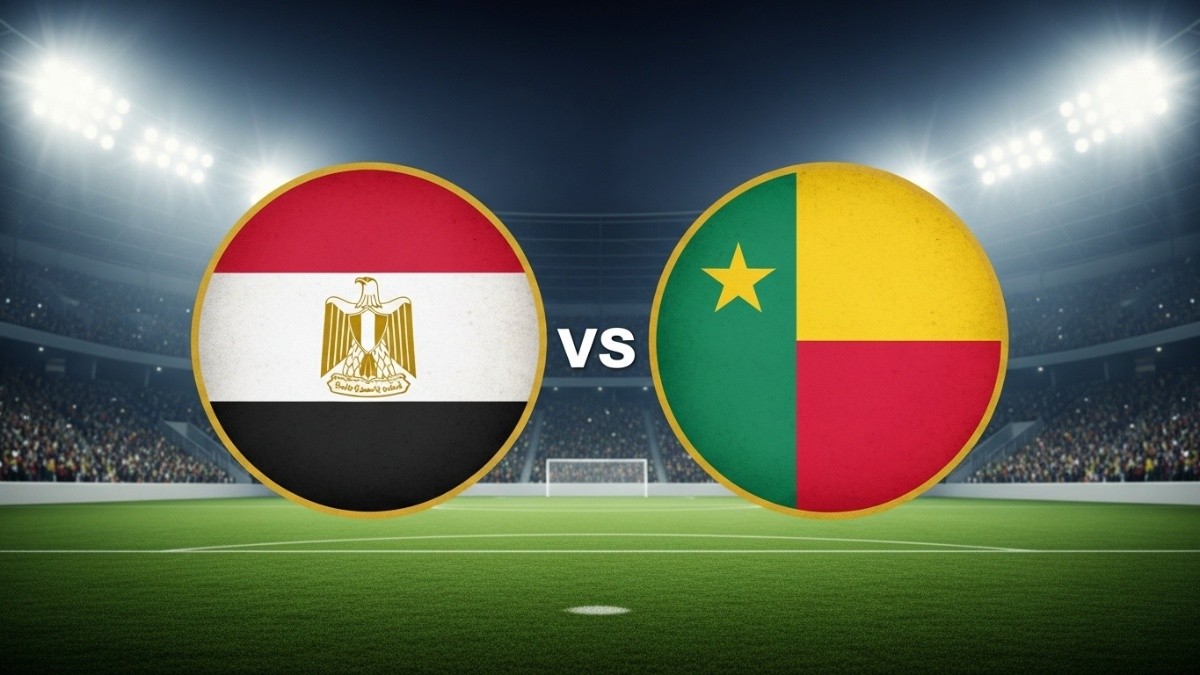
Egypt needed 123 minutes, two Al Ahly debutants, and Mohamed Salah’s killer instinct to edge past a stubborn Benin side 3-1 in a dramatic AFCON last-16 clash that had everything.
There’s something almost poetic about what unfolded at the Stade Adrar on Monday evening. Benin’s social media team, in their infinite wisdom, had decided to publish a pre-match poster showing Mohamed Salah on the ground, seemingly begging for mercy while striker Steve Mounié stood over him wielding a whip. Bold choice. Questionable taste. Terrible timing.
Because when you poke a lion—or in this case, a Pharaoh—you’d better hope he doesn’t wake up hungry.
A match that refused to follow the script
Egypt 3-1 Benin doesn’t tell you half the story. For 68 minutes, Gernot Rohr’s Cheetahs executed their defensive game plan to near perfection. Marcel Dandjinou was immense between the posts, denying Omar Marmoush one-on-one inside the opening ten minutes with the kind of save that announces a goalkeeper to a wider audience. The Manchester City forward hesitated, and Dandjinou pounced.
The first half was a masterclass in defensive organization from Benin. Compact lines, minimal space between departments, and enough physicality to frustrate Egypt’s Premier League-laden attack. Yohan Roche cleared Marmoush’s effort off the line in the 21st minute. Tamimou Ouorou blocked Rami Rabia at point-blank range in the second half. Every time Egypt thought they’d found a crack, another Beninese body appeared.
“We are not the favourites, but that does not prevent us from playing for our opportunity,” Rohr had said before kick-off. His players were proving him right.
The Al Ahly connection breaks the deadlock
Then came the 69th minute. Mohamed Hany drove down the right, found space that hadn’t existed moments before, and pulled the ball back to the edge of the area. Marwan Attia—the Al Ahly midfielder making only his second international start—met it first time. The strike curled away from Dandjinou’s desperate dive and nestled in the top corner.
His first goal for Egypt. The timing couldn’t have been better, or worse, depending on your allegiance.
What makes this goal remarkable is the context. Attia wasn’t supposed to be the hero. That role was written for Salah, for Marmoush, for the headline names earning fortunes in England. Instead, it was a 24-year-old from Cairo who’d spent the tournament watching from the bench. The expected goals model gave that strike a 0.09 xG value. Mathematics, meet human will.
Benin’s refusal to die
Seven minutes from time, with Egyptian supporters already mentally calculating their quarter-final opponents, Benin found life. Junior Olaitan intercepted a casual pass from Mohamed El Shenawy—a moment of complacency that will haunt the goalkeeper—and whipped in a cross. The ball took a wicked deflection, El Shenawy parried, and there was Jodel Dossou to bundle home from a yard out.
1-1. Extra time. The Stade Adrar held its breath.
To appreciate what this meant for Benin, you need context. This was a nation that had won exactly one match at the Africa Cup of Nations in six attempts across 18 years. Their 1-0 victory over Botswana in the group stage was their first ever AFCON triumph. History, for them, was simply competing. Equalizing against seven-time champions Egypt in knockout football? That was fairy tale territory.
Ibrahim’s header and Salah’s final word
But fairy tales don’t always have happy endings for the underdog.
Seven minutes into extra time, Egypt worked a short corner routine. Attia, the same man who’d opened the scoring, delivered a perfect cross to the back post. Yasser Ibrahim—another Al Ahly product, another player scoring his first international goal—rose highest and looped a header beyond Dandjinou’s reach.
2-1 Egypt. The Cheetahs’ legs were gone. Their dream was fading.
Salah, who’d endured a frustrating evening by his standards, had one more contribution. In the 123rd minute, with Benin throwing everything forward in desperation, the Liverpool forward collected a pass in his own half, drove through the middle of the pitch, and lifted a delicate finish over the onrushing Dandjinou.
His fourth goal of the tournament. His tenth career AFCON goal. Egypt’s statement complete.
What this means for Egypt’s title hopes
Sixteen years. That’s how long Egypt have waited to lift this trophy. The record seven-time champions last tasted AFCON glory in 2010, back when Salah was a teenager with unfulfilled potential at El Mokawloon.
Coach Hossam Hassan had described this tie as “the AFCON final” in his pre-match press conference. The same Hossam Hassan who won three titles as a player and understands the weight of Egyptian expectation better than most.
“We are Egypt. Seven titles, 120 million supporters,” he’d declared. “We will do everything to make them happy.”
The concerning elements remain, however. Egypt needed 123 minutes to dispatch a side that had scraped through as one of the best third-placed teams. Marmoush and Salah combined for 46 final-third passes between them but frequently found themselves isolated. The final xG was level at 1.22 each—hardly the dominance expected from pre-tournament favourites.
Egypt will face either Ivory Coast or Burkina Faso in Saturday’s quarter-final in Agadir. Neither will be as accommodating as Benin were for 68 minutes.
A word on Benin’s journey
There’s a tendency in football to focus only on winners. But Benin’s AFCON 2025 campaign deserves recognition. This was a squad missing captain Steve Mounié through injury. A team that had never won a single match at the tournament before this edition. A nation where football infrastructure remains years behind their continental rivals.
Rohr, the German coach who previously took Nigeria to new heights, has built something in Cotonou. Dandjinou’s performance alone will have European scouts making enquiries. Dossou’s fighting spirit epitomized their tournament.
“We may not have the same status,” Rohr said before kick-off, “but we have the desire, the faith, and the ambition to write a new chapter in our history.”
They wrote that chapter. It just didn’t have the ending they wanted.
The verdict
Egypt survive. That’s the fairest assessment. They didn’t dominate, didn’t overwhelm, didn’t make a statement that will frighten the remaining contenders. But knockout football isn’t about aesthetics. It’s about getting through.
The Pharaohs got through. And somewhere on social media, Benin’s graphic designer is probably reconsidering their career choices.
Sometimes the best response to disrespect isn’t words. It’s a 3-1 scoreline and a place in the quarter-finals.

Egypt needed 123 minutes, two Al Ahly debutants, and Mohamed Salah’s killer instinct to edge past a stubborn Benin side 3-1 in a dramatic AFCON last-16 clash that had everything.
There’s something almost poetic about what unfolded at the Stade Adrar on Monday evening. Benin’s social media team, in their infinite wisdom, had decided to publish a pre-match poster showing Mohamed Salah on the ground, seemingly begging for mercy while striker Steve Mounié stood over him wielding a whip. Bold choice. Questionable taste. Terrible timing.
Because when you poke a lion—or in this case, a Pharaoh—you’d better hope he doesn’t wake up hungry.
A match that refused to follow the script
Egypt 3-1 Benin doesn’t tell you half the story. For 68 minutes, Gernot Rohr’s Cheetahs executed their defensive game plan to near perfection. Marcel Dandjinou was immense between the posts, denying Omar Marmoush one-on-one inside the opening ten minutes with the kind of save that announces a goalkeeper to a wider audience. The Manchester City forward hesitated, and Dandjinou pounced.
The first half was a masterclass in defensive organization from Benin. Compact lines, minimal space between departments, and enough physicality to frustrate Egypt’s Premier League-laden attack. Yohan Roche cleared Marmoush’s effort off the line in the 21st minute. Tamimou Ouorou blocked Rami Rabia at point-blank range in the second half. Every time Egypt thought they’d found a crack, another Beninese body appeared.
“We are not the favourites, but that does not prevent us from playing for our opportunity,” Rohr had said before kick-off. His players were proving him right.
The Al Ahly connection breaks the deadlock
Then came the 69th minute. Mohamed Hany drove down the right, found space that hadn’t existed moments before, and pulled the ball back to the edge of the area. Marwan Attia—the Al Ahly midfielder making only his second international start—met it first time. The strike curled away from Dandjinou’s desperate dive and nestled in the top corner.
His first goal for Egypt. The timing couldn’t have been better, or worse, depending on your allegiance.
What makes this goal remarkable is the context. Attia wasn’t supposed to be the hero. That role was written for Salah, for Marmoush, for the headline names earning fortunes in England. Instead, it was a 24-year-old from Cairo who’d spent the tournament watching from the bench. The expected goals model gave that strike a 0.09 xG value. Mathematics, meet human will.
Benin’s refusal to die
Seven minutes from time, with Egyptian supporters already mentally calculating their quarter-final opponents, Benin found life. Junior Olaitan intercepted a casual pass from Mohamed El Shenawy—a moment of complacency that will haunt the goalkeeper—and whipped in a cross. The ball took a wicked deflection, El Shenawy parried, and there was Jodel Dossou to bundle home from a yard out.
1-1. Extra time. The Stade Adrar held its breath.
To appreciate what this meant for Benin, you need context. This was a nation that had won exactly one match at the Africa Cup of Nations in six attempts across 18 years. Their 1-0 victory over Botswana in the group stage was their first ever AFCON triumph. History, for them, was simply competing. Equalizing against seven-time champions Egypt in knockout football? That was fairy tale territory.
Ibrahim’s header and Salah’s final word
But fairy tales don’t always have happy endings for the underdog.
Seven minutes into extra time, Egypt worked a short corner routine. Attia, the same man who’d opened the scoring, delivered a perfect cross to the back post. Yasser Ibrahim—another Al Ahly product, another player scoring his first international goal—rose highest and looped a header beyond Dandjinou’s reach.
2-1 Egypt. The Cheetahs’ legs were gone. Their dream was fading.
Salah, who’d endured a frustrating evening by his standards, had one more contribution. In the 123rd minute, with Benin throwing everything forward in desperation, the Liverpool forward collected a pass in his own half, drove through the middle of the pitch, and lifted a delicate finish over the onrushing Dandjinou.
His fourth goal of the tournament. His tenth career AFCON goal. Egypt’s statement complete.
What this means for Egypt’s title hopes
Sixteen years. That’s how long Egypt have waited to lift this trophy. The record seven-time champions last tasted AFCON glory in 2010, back when Salah was a teenager with unfulfilled potential at El Mokawloon.
Coach Hossam Hassan had described this tie as “the AFCON final” in his pre-match press conference. The same Hossam Hassan who won three titles as a player and understands the weight of Egyptian expectation better than most.
“We are Egypt. Seven titles, 120 million supporters,” he’d declared. “We will do everything to make them happy.”
The concerning elements remain, however. Egypt needed 123 minutes to dispatch a side that had scraped through as one of the best third-placed teams. Marmoush and Salah combined for 46 final-third passes between them but frequently found themselves isolated. The final xG was level at 1.22 each—hardly the dominance expected from pre-tournament favourites.
Egypt will face either Ivory Coast or Burkina Faso in Saturday’s quarter-final in Agadir. Neither will be as accommodating as Benin were for 68 minutes.
A word on Benin’s journey
There’s a tendency in football to focus only on winners. But Benin’s AFCON 2025 campaign deserves recognition. This was a squad missing captain Steve Mounié through injury. A team that had never won a single match at the tournament before this edition. A nation where football infrastructure remains years behind their continental rivals.
Rohr, the German coach who previously took Nigeria to new heights, has built something in Cotonou. Dandjinou’s performance alone will have European scouts making enquiries. Dossou’s fighting spirit epitomized their tournament.
“We may not have the same status,” Rohr said before kick-off, “but we have the desire, the faith, and the ambition to write a new chapter in our history.”
They wrote that chapter. It just didn’t have the ending they wanted.
The verdict
Egypt survive. That’s the fairest assessment. They didn’t dominate, didn’t overwhelm, didn’t make a statement that will frighten the remaining contenders. But knockout football isn’t about aesthetics. It’s about getting through.
The Pharaohs got through. And somewhere on social media, Benin’s graphic designer is probably reconsidering their career choices.
Sometimes the best response to disrespect isn’t words. It’s a 3-1 scoreline and a place in the quarter-finals.