


Summary
Ducking is a short, controlled lowering of your upper body to evade punches that come at head height, usually hooks or looping shots. Unlike slipping or leaning away, ducking keeps you close enough to respond immediately.
It’s a compact move that requires timing, balance, and awareness of your opponent’s rhythm while maintaining your own balance and rhythm.
Done right, it keeps you safe without breaking your stance or wasting energy, especially in the context of boxing where energy is precious, and every movement matters.
This article explains how to duck correctly, when to use it, common mistakes to avoid, and drills to sharpen your timing and defense.
Key Takeaways
-
Ducking is a quick, controlled lowering of the body to evade hooks and overhands while staying balanced and ready to counter.
-
Proper technique—bending the knees, keeping eyes forward, and maintaining stance—maximizes safety and effectiveness.
-
Regular drills and combining ducking with slips, rolls, and pivots develop timing, rhythm, and defensive fluidity in boxing.
Ducking Vs Rolling
Ducking and rolling are two defensive movements that often get mixed up, but they serve different purposes. Ducking is a quick drop of your body to avoid straight punches like jabs and crosses. It keeps you centered and ready to counter right away. Rolling, on the other hand, works best against hooks. Instead of dropping straight down, you shift your weight and rotate your upper body to let the punch glide past you. Ducking is sharp and compact, while rolling is smooth and circular. Learning when to use each one helps you stay safe, create angles, and return fire with confidence.
How To Duck Properly
Ducking isn’t about bending at the waist; it’s about bending your knees and lowering your center of gravity.
How it works:
- Start In Your Stance: Keep your guard up and feet shoulder-width apart. Stay relaxed and balanced.
- Lower With Your Legs: Bend your knees slightly to drop your level. Avoid leaning forward or looking down.
- Keep Your Eyes Forward: Maintain vision on your opponent. This helps you read the next punch or opportunity to counter.
- Return Smoothly To Stance: Rise using your legs, not your back. Be ready to follow with a counter punch or pivot.
The key is smooth, controlled motion; you’re not ducking “away” but moving under the strike.
When To Use Ducking
Ducking works best against looping punches such as hooks and overhands. You can use it to:
- Slip under a hook and counter with a body shot or uppercut.
- Avoid punches when backed against the ropes.
- Reset your position during close-range exchanges.
- Disrupt your opponent’s rhythm by changing your level suddenly.
You can also combine it with pivots or rolls to move laterally after avoiding a shot.
Common Mistakes To Avoid
- Bending At The Waist: This throws off your balance and makes it harder to counter.
- Leaning Too Far Forward: Keeps you off-balance and vulnerable to uppercuts.
- Looking Down: Always keep your eyes on your opponent.
- Holding The Duck Too Long: The move should be quick and controlled. Drop, rise, and move. Staying down too long would give your opponent the chance to engage a follow-up.
- Breaking Stance: Keep your feet grounded and shoulders square as you duck.
Mastering proper posture makes the movement effortless and safe.
Drills To Practice Ducking
1) Shadowboxing Duck Drill
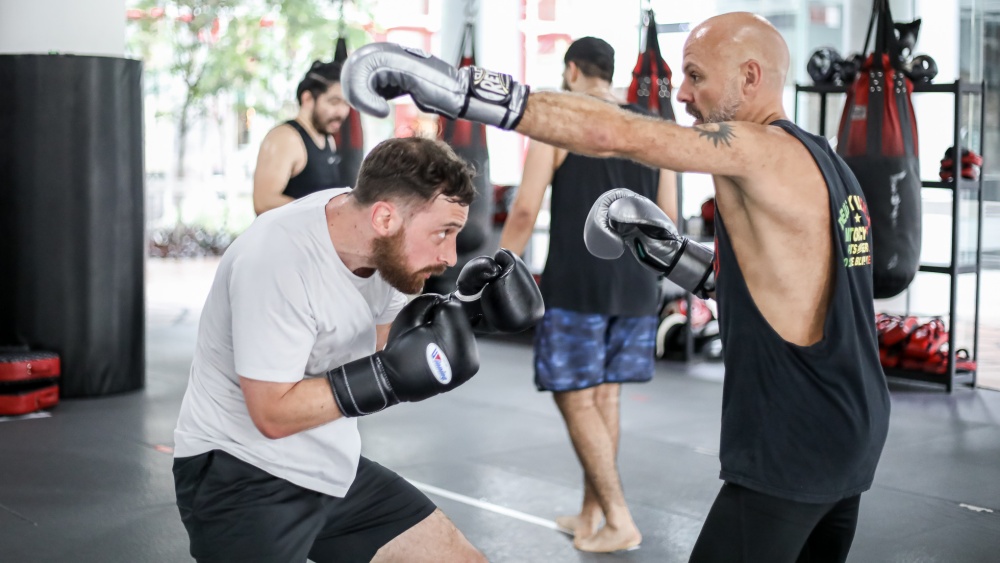
Visualize an opponent’s hook coming toward you. Bend your knees slightly and duck under, then counter with an uppercut or hook. Focus on rhythm and smooth motion.
2) Rope Line Drill
Stretch a rope or band at shoulder height. Move along it, ducking under while maintaining your stance and keeping your eyes forward. Once you’re more confident and fluid with the movements, add in some combinations to make it more challenging against an imaginary opponent.
3) Partner Hook Drill
Have a partner throw slow hooks. Duck under each one and return with a counter punch. This builds timing and reaction speed.
4) Bag Reaction Drill
After throwing a combination on the stationary heavy bag, switch to the reaction bag and practice ducking as if you are slipping under a counter hook before continuing your punches.
Practicing these drills regularly improves muscle memory and ensures your movement stays sharp during real exchanges.
How Ducking Connects To Other Defensive Techniques
Ducking is often used with slipping and rolling. You can slip a jab, duck under a hook, then roll out to create an angle. This flow keeps your defense dynamic while setting up counters naturally.
You can also add a pivot or short step to exit the line of fire. The more you blend these techniques, the more unpredictable and balanced your boxing becomes.
FAQs About Ducking In Boxing
Q: What Punches Can I Duck Under?
A: Mainly hooks and overhands. Straight punches are better avoided through slips or pullbacks.
Q: How Can I Make My Duck Faster?
A: Strengthen your legs and core, and practice controlled repetitions. Speed comes naturally with coordination.
Q: Should I Always Counter After Ducking?
A: Not always, but ducking puts you in a great position to throw uppercuts or body shots.
Q: Can I Use Ducking In Combinations With Footwork?
A: Yes. Duck and pivot to create angles or exit pressure situations safely.
Final Thoughts
Ducking is one of the simplest yet most effective defensive tools in boxing. It allows you to stay composed, avoid heavy shots, and create openings for powerful counters.
Focus on bending your knees, keeping your eyes up, and staying balanced. Over time, ducking becomes an instinctive movement that adds rhythm, control, and confidence to your boxing style.
You may also like:
Mastering The L-Step In Boxing: How To Move Like A Pro

Summary In Boxing, staying still makes you an easy target. Upper body movement helps you become unpredictable while keeping your guard intact. It connects directly to your offense, defense and counterpunching ability. Upper body movement…
Summary The L step is a movement pattern where you step diagonally backward and to the side, forming a “L” shape movement. It allows you to move off the centerline and create angles while maintaining…
Summary The uppercut is one of boxing’s most powerful and underrated punches. It travels vertically from underneath your opponent’s guard, targeting the chin or body. While it looks flashy, it’s also one of the most…
Summary Training bags have been a cornerstone of striking for decades. They allow athletes to practice timing, precision, and combinations without needing a live partner. In both Boxing and Muay Thai, bags are used not…
Summary You need to learn how to throw punches in bunches if you plan to compete as a boxer. Sure, the first thing you need to focus on when you start boxing training is the…
Summary In Boxing, the beauty of outboxing lies in its precision and adaptability. It’s the art of dictating distance, tempo, and rhythm while forcing your opponent to fight your fight. But mastering outboxing goes beyond…
Summary Your core is the foundation of your movement. Every strike you throw starts from the ground and transfers through your core before reaching your limbs. In Muay Thai, a strong core does far more…
Summary Whole foods provide your body with the building blocks it needs to function at its best, whether you are working, studying, or training. They contain fiber for digestion, antioxidants for protection, and complex carbohydrates…
Summary The festive season often brings a mix of excitement and stress. Between planning events, shopping, managing work deadlines, and staying healthy, it can feel like a lot to juggle. Preparing early helps you enjoy…
Summary Weekends are the perfect time to reset your mind, recharge your body, and step away from the weekday routine. In Singapore, you don’t need intense workouts or long training sessions to stay active. Simple,…
Summary Blood sugar refers to the amount of glucose circulating in your bloodstream. It comes mainly from carbohydrates in food, which are broken down into simple sugars during digestion. Your body relies on insulin, a…
Summary In Brazilian Jiu-Jitsu, a trip is a standing technique used to unbalance (Kuzushi) your opponent and take them down by targeting their legs. Unlike powerful judo throws that lift or launch an opponent, trips…