


Summary
Technical mastery in MMA doesn’t just rely on power. It’s also about timing, positioning, adaptability, and the ability to solve problems in real time. A technical fighter understands distance, timing, and transitions. They know when to strike, when to grapple, and how to adjust mid-fight. These athletes rarely rely on reckless exchanges. Instead, they control the pace, create openings, and capitalize on mistakes with efficiency.
The most technical fighters in MMA history stand out because they combine skill, intelligence, and efficiency across all phases of the fight.
This article highlights eight of the most technical MMA fighters ever, featuring legends from global MMA and athletes from ONE Championship.
Key Takeaways
- The most technical MMA fighters excel at controlling distance, timing exchanges, and making smart decisions under pressure.
- Technical mastery in MMA comes from blending striking, wrestling, and grappling seamlessly rather than relying on a single strength.
- Fighters with high technical skill tend to adapt better to different opponents and rule sets, which allows them to succeed across eras.
The Era Of Technical Excellence
While many fans are drawn to fast and flashy knockouts, technical fighters often leave a longer-lasting impact on the sport. Because their success is built on skill, timing, and decision-making rather than physical attributes alone, they tend to age well, remain competitive longer, and adapt as the game evolves. Their approach also influences future generations, shaping how MMA is taught, trained, and understood.
These fighters elevate the sport by proving that intelligence, discipline, and control are just as important as toughness. While this list highlights some of the most technical fighters we admire, it is not meant to be a definitive ranking, but rather a reflection of the styles and qualities that continue to push the sport forward.
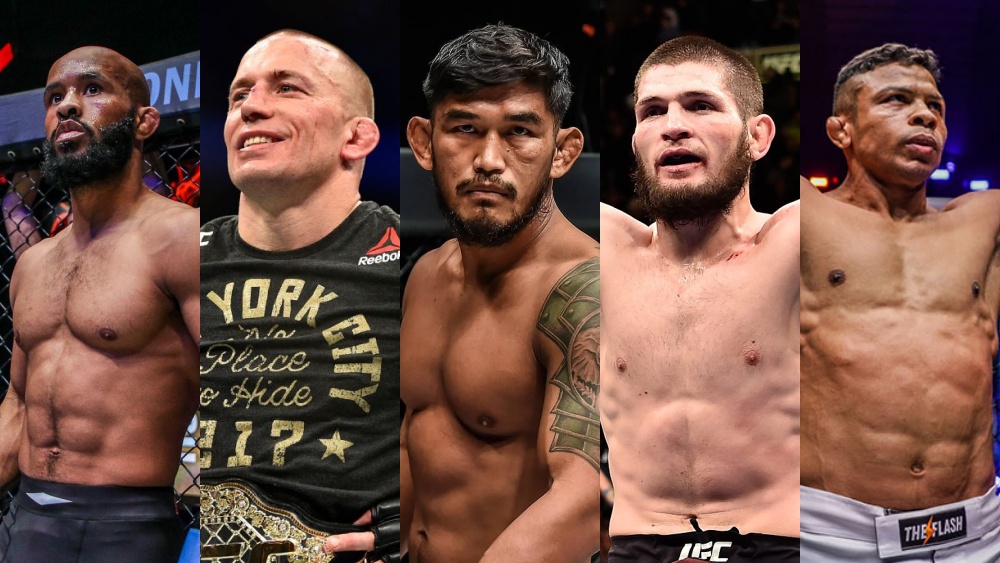
Having competed at the highest level, many would agree that ONE Hall of Famer Demetrious Johnson was one of the most technical and well-rounded pound-for-pound fighters of his era. What truly separated him from others was not just his speed or clean technique, but his ability to read opponents, process information mid-fight, and make precise adjustments under pressure.
His rivalry with Adriano Moraes is a perfect example of this approach. After suffering a surprising loss in their first encounter, Johnson returned with a refined game plan in the rematch, making clear adjustments in distance management, clinch awareness, and defensive positioning. That tactical evolution led to a decisive victory and showcased his ability to learn, adapt, and execute at the highest level. Their trilogy bout further reinforced this, as Johnson controlled the fight with composure and efficiency, proving that his success was built on strategy as much as skill.
These performances highlight why Demetrious Johnson is regarded as one of the most complete martial artists in history, capable of adapting across opponents, styles, and high-pressure situations with remarkable consistency.
Georges St Pierre built his legacy on intelligent game planning, adaptability, and elite technical execution. His jab, timing, and wrestling entries set a standard that few fighters have matched. Rather than relying on reckless exchanges, St Pierre controlled fights through distance management, positional awareness, and disciplined decision-making.
A clear example of this approach can be seen in his fight against Josh Koscheck. After dealing with Koscheck’s relentless wrestling pressure in their first meeting, St Pierre returned in the rematch with a refined strategy, using constant jabs, footwork, and takedown defense to neutralize his opponent for five rounds. The performance was a masterclass in tactical adjustment and fight control.
This analytical, risk-aware style remains a blueprint for technical MMA success, showing how preparation and execution can consistently overcome physical threats at the highest level.
Aung La N Sang demonstrated a high level of technical versatility across multiple weight classes. His ability to blend striking defense, takedown awareness, and submission control allowed him to compete effectively against a wide range of opponents. Rather than relying on a single strength, he fought with composure and balance, adjusting his approach based on the demands of each matchup.
This adaptable style made him a consistently difficult opponent to prepare for and a standout example of how well-rounded skills and strategic awareness can define long-term success at the highest level.
Khabib Nurmagomedov’s undefeated run was built on more than pressure and physical dominance. Throughout his career, he showed an unusual level of calm and composure inside the cage, often analyzing his opponents’ reactions as the fight unfolded. Rather than forcing finishes, he patiently advanced position by position, allowing mistakes to present themselves.
Drawing heavily from his background in Sambo and wrestling, Khabib used chain takedowns, trips, and cage control to dictate where the fight took place. Once on the ground, his awareness of balance and leverage allowed him to neutralize offense while maintaining constant pressure. Even against elite strikers, he stayed disciplined, avoided unnecessary risks, and executed a clear game plan round after round.
His undefeated record reflects not just physical ability, but a deep understanding of control, timing, and strategy. Khabib’s career remains a powerful example of how composure, technical structure, and intelligent decision-making can lead to sustained dominance at the highest level of MMA.
Bibiano Fernandes
Bibiano Fernandes built his legacy on technical excellence, consistency, and intelligent decision-making. With a strong Brazilian Jiu-Jitsu base supported by effective wrestling, he was able to dictate where fights took place and control opponents through positioning rather than brute force. His calm approach allowed him to stay composed in high-pressure moments and capitalize on small openings.
What set Fernandes apart was his ability to maintain dominance over long stretches without overextending. By prioritizing balance, control, and efficiency, he reduced risk while steadily wearing opponents down. This measured, detail-oriented style defined his reign and cemented his reputation as one of the most technically sound bantamweights in MMA history.
Final Thoughts
The most technical MMA fighters in history share a common trait. They understand the sport at a deeper level. Through timing, positioning, and intelligent execution, they turned complex situations into controlled outcomes. From global icons like Demetrious Johnson and Georges St Pierre to ONE Championship legends such as Aung La N Sang and Bibiano Fernandes, these athletes represent the highest level of technical mastery in MMA. Their influence continues to shape how martial arts are practised and appreciated today.
You may also like:
The Rise Of A Mongolian Warrior: Enkh-Orgil Baatarkhuu

Summary Sambo is a combat sport that originated in the Soviet Union, created to train military and law enforcement personnel. The name comes from a phrase meaning self-defense without weapons. Unlike traditional Gi-based grappling, Sambo…
Summary Mixed Martial Arts offers a complete way to stay fit, learn new skills, and build confidence. But the biggest challenge for many people is finding a routine that matches their lifestyle. Whether you work…
Summary Enkh-Orgil Baatarkhuu has emerged as one of the most captivating figures in modern MMA. Drawing from his Mongolian roots and the country’s rich combat sports heritage, he has steadily built a name for himself…
Summary Modern MMA continues to evolve with fighters borrowing from different martial arts and adapting unique techniques to fit the sport. The snake kick is one of these creative strikes. It is not as common…
Summary The penetration step is a fundamental wrestling movement used to close the distance and drive power into a takedown. It’s not just a forward step but a full-body motion that helps you shoot deep…
Summary Takedown feints are one of the most effective tools in modern MMA. By threatening a level change without committing fully, fighters can draw defensive reactions, open striking opportunities, or disguise real takedown attempts. This…
Summary Scrambles are one of the most dynamic and unpredictable parts of wrestling. A scramble in wrestling occurs when both athletes lose or exchange control and must react quickly to regain dominant position. These moments…
Summary Over the weekend, in the boxing scene, Anthony Joshua delivered a decisive statement performance by stopping Jake Paul with a knockout in round six. The bout unfolded as a clash between elite heavyweight fundamentals…
Summary Before Muay Thai became a unified national martial art, Thailand was home to several regional fighting styles. These styles were shaped by geography, culture, and the needs of local warriors. Muay Korat from the…
Summary The New Year is a time for celebration, reflection, and new beginnings. In Singapore, the arrival of 2026 brings exciting countdown events, special performances, citywide activities, and opportunities to start the year feeling inspired….
Summary Inflammation is a natural response that helps the body heal. However, chronic inflammation can lead to fatigue, discomfort, and long-term health issues. Anti-inflammatory diets have become more popular in recent years as people look…
Summary While BJJ is often known for ground fighting, having a reliable takedown is essential for controlling where the match begins. The fireman’s carry is one of the most dynamic takedowns available because it uses…