


Summary
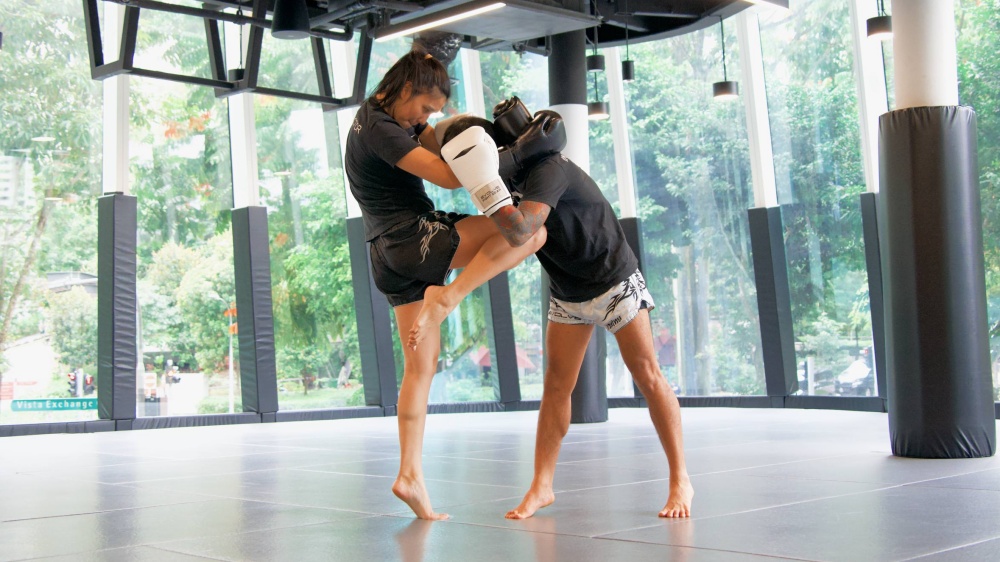
Hand fighting is one of the most important yet underrated skills in Muay Thai. While strikes often get the spotlight, controlling your opponent’s hands and arms plays a major role in dictating distance, timing, and clinch dominance.
It appears constantly during clinch exchanges, close-range striking, and transitions between distance and clinch. Fighters use hand fighting to gain an inside position, prevent frames, and set up attacks.
Effective hand fighting allow fighters to block strikes, disrupt rhythm, and create clean openings for knees, elbows, and transitions.
This article explains what hand fighting is in Muay Thai, why it matters, and how it is used in real fights.
Key Takeaways
- Hand fighting refers to the act of controlling your opponent’s hands and arms during a match. Effective control helps create space while limiting your opponent’s striking options.
- Hand fighting often plays a key role in clinch entry, defense, and off-balancing.
- During hand fighting exchanges, timing and positioning matter more than grip strength.
Why Hand Fighting Is So Important
Muay Thai is a sport built around balance and control. Without hand fighting, entering the clinch becomes risky, and defending strikes becomes reactive.
Good hand fighting allows you to:
- Shut down punches before they land.
- Control posture in the clinch.
- Create openings for knees and elbows.
- Disrupt an opponent’s rhythm.
- Stay balanced while attacking.
Rather than reacting to strikes, hand fighting lets you take the initiative.
Common Situations Where Hand Fighting Occurs
- Clinch Exchanges: In the clinch, hand fighting determines who controls posture. Inside control with your hands often leads to cleaner knees and better balance.
- Close Range Striking: At close distance, hand fighting helps block punches and create angles for elbows or counters.
- Clinch Entry: Before clinching, hand fighting helps clear frames and secure head or arm position safely.
- Defending Clinch Attacks: Strong hand positioning prevents opponents from locking dominant grips or pulling your posture down.
Key Hand Fighting Concepts In Muay Thai
- Inside Control: Winning the inside position with your hands gives you leverage and makes it harder for your opponent to strike effectively.
- Wrist And Forearm Awareness: Controlling wrists or forearms limits punching power and prevents strong frames.
- Elbow Position: Keeping elbows tight protects your body and helps you pummel for better control.
- Sensitivity And Timing: Hand fighting works best when movements are small and well-timed rather than forceful.
How Hand Fighting Creates Attacking Opportunities
Hand fighting isn’t just defensive. Once you control your opponent’s hands, openings appear naturally.
Clearing one arm can expose the head for elbows. Pinning or trapping an arm can create space for the knees. Breaking posture makes it easier to off-balance or turn your opponent.
These openings often appear for brief moments, which is why timing matters more than strength.
Common Mistakes In Hand Fighting
Many fighters struggle with hand fighting due to avoidable habits. Some of which include:
- Grabbing too tightly and losing mobility.
- Focusing only on hands and ignoring posture.
- Reaching too far and losing balance.
- Standing too tall in the clinch.
- Relying on strength instead of position.
Effective hand fighting should feel controlled and efficient. The key here is leverage; don’t just rely on a factor and neglect everything else.
Hand Fighting Vs Grabbing
Hand fighting is active and dynamic. Grabbing is static. In Muay Thai, static grips are easier to break and counter. Hand fighting stays fluid, allowing you to adjust as your opponent moves.
This is why experienced fighters rarely hold one position for long.
How To Improve Hand Fighting In Training
- Drill Clinch Pummeling: Repeated pummeling builds comfort and awareness in close range.
- Focus On Small Movements: Short, precise adjustments are more effective than big motions. Imagine a jab coming and picture how you can control it with your hand.
- Stay Relaxed: One of the most overlooked but important aspects of all combat sports. Staying calm and relaxed helps you think and rationalize your movements. Tension slows reaction time and makes movements predictable.
- Combine With Footwork: Good hand fighting works best when paired with balance and movement. Incorporate pivots, sidesteps, and backsteps to keep your hand fighting unpredictable and effective.
FAQs On Hand Fighting In Muay Thai
Q: Is Hand Fighting Only For Clinch Fighting?
A: No. It applies everywhere, while striking, attempting a clinch entry, or even during defensive situations.
Q: Does Hand Fighting Require Strength
A: Not entirely. Positioning and timing matter more than grip strength.
Q: Is Hand Fighting Legal In Muay Thai
A: Yes. As long as it’s used for control and not joint manipulation.
Final Thoughts
Hand fighting is a foundational skill that connects striking, clinch control, and defense in Muay Thai. By learning how to control hands and arms effectively, fighters gain better balance, safer clinch entries, and more consistent attacking opportunities. While it may not be as visible as strikes, strong hand fighting often determines who controls the fight.
You may also like:
How To Apply The Armlock In Muay Thai Clinch Fighting

Summary The Muay Thai armlock is a lesser-known but highly effective control technique used in clinch situations. While Muay Thai is best known for strikes, elbows, and knees, experienced fighters also use positional control to…
Summary Nadaka Yoshinari is widely regarded as one of the most technically accomplished Muay Thai fighters in the current generation. Known for his sharp timing, composure, and elite fight IQ, he has built a rare…
Summary While Muay Thai is known for its kicks, punches, elbows, and knees, not all styles focus on long-range striking. The Muay Plam is a style that thrives in the clinch, where fighters stay chest…
Summary Before Muay Thai became a unified national martial art, Thailand was home to several regional fighting styles. These styles were shaped by geography, culture, and the needs of local warriors. Muay Korat from the…
Summary Tawanchai PK Saenchai is one of the most electrifying Muay Thai fighters of this generation. Known for his sharp timing, smooth footwork, and devastating left kick, he has built a reputation as a calm…
Summary Muay Thai is known for powerful strikes, but defense is just as important. Good defense is not passive. It sets up counters, controls range, and keeps you calm under pressure. Defensive combinations in Muay…
Summary Boxing is often seen as a combat sport, but from a scientific perspective, it’s one of the most effective full-body workouts available. From a physiological standpoint, boxing is a high-intensity activity that elevates heart…
Summary Across Singapore, more parents are turning to structured kids fitness programs to support their children’s physical development, focus, and confidence. Instead of unstructured play alone, these programs offer clear progression, guidance, and consistency. From…
Summary The technical mount is one of the most effective control positions in Brazilian Jiu-Jitsu. It sits between the traditional mount and back control, offering strong balance, pressure, and access to multiple transitions. Instead of…
Summary Japan has produced some of the most technically refined and disciplined fighters in modern combat sports. Across boxing, MMA, kickboxing, and Muay Thai, Japanese athletes have built global reputations through their precision, consistency, and…
Summary Shrimping refers to the action of moving your hips away from your opponent by pushing off the mat with your feet and shoulders. The movement resembles a shrimp curling its body, which is where…
Summary Hand position plays a major role in boxing defense, movement, and counter punching. Some boxers prefer a traditional hands-up guard for protection and structure, while others fight with their hands down to rely on…