


Summary
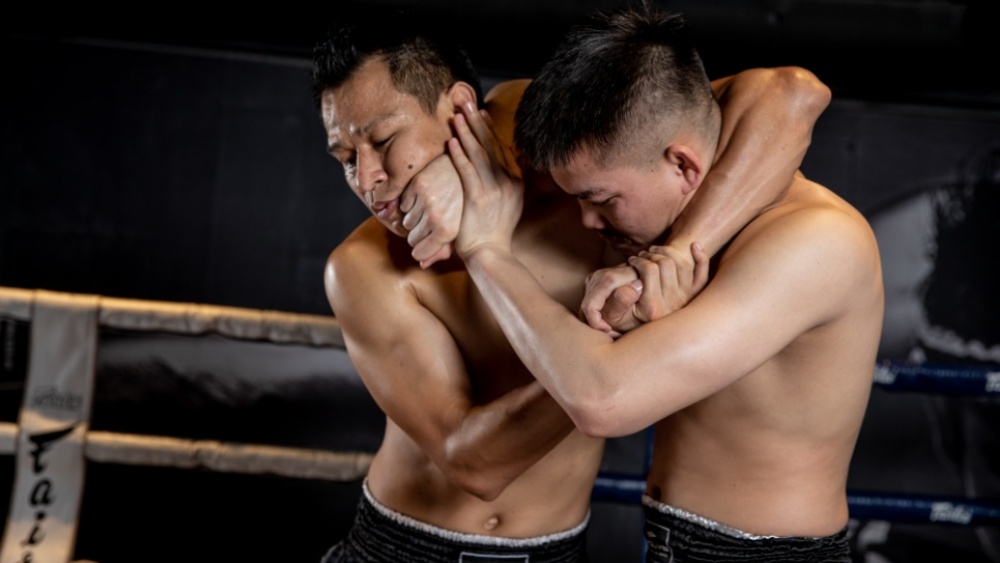
The Muay Thai armlock is a lesser-known but highly effective control technique used in clinch situations. While Muay Thai is best known for strikes, elbows, and knees, experienced fighters also use positional control to disrupt balance and limit an opponent’s offense. The armlock is commonly used when fighters are chest to chest or fighting for inside control. By isolating one arm, a fighter can dominate posture, create angles, and attack with knees or elbows.
Apart from isolating, the armlock plays an important role in controlling posture, creating openings, and setting up strikes without relying on brute force.
This article explains what the Muay Thai armlock is, how it works, and how fighters use it during live exchanges.
Key Takeaways
- The Muay Thai armlock is a clinch control technique rather than a submission.
- It helps disrupt posture, limit strikes, and create openings for knees and off-balancing.
- Timing, grip placement, and body positioning matter more than strength.
Why The Armlock Is Effective In Muay Thai
The clinch is a battle for balance and control. When one arm is trapped, the opponent loses symmetry and becomes easier to manipulate. The armlock reduces defensive options and makes it harder for the opponent to strike effectively.
As the opponent tries to free their arm, openings appear in posture and balance, which can be exploited immediately.
Common Situations Where The Armlock Is Used
- Inside The Clinch: When both fighters are fighting for head or arm position, the armlock can be applied by slipping inside and pinning the opponent’s arm against their body.
- After Catching A Strike: If an opponent throws a lazy punch or frames poorly in the clinch, the arm can be trapped quickly before they reset.
- During Clinch Transitions: As fighters adjust grips or pummel for position, brief moments of imbalance allow the armlock to be applied without force.
How The Muay Thai Armlock Works
The key to the armlock is connection rather than squeezing. The fighter controls the opponent’s wrist or forearm while using their own arm, shoulder, or chest to pin it in place. At the same time, the hips stay close to prevent space.
Once the arm is controlled, the fighter can steer the opponent’s posture, step into angles, or off-balance them. The armlock works best when combined with head control and foot positioning.
Attacks That Pair Well With The Armlock
- Knees: With one arm trapped, the opponent has fewer tools to block incoming knees. This makes the body and thigh knees especially effective.
- Elbows: Short elbows become available as the opponent struggles to regain balance and posture.
- Sweeps: The armlock creates asymmetry, making it easier to turn the opponent or force missteps.
Using The Armlock To Slow Down And Control Your Opponent
While the armlock is often associated with setting up strikes or transitions, it can also be an effective tool in the clinch to drain your opponent’s energy. By controlling the arm and limiting their ability to frame or strike, you force them to constantly resist and readjust. Watch the video above to learn how to apply the armlock effectively, not only against taller opponents but in a wide range of clinch situations. The focus is on proper positioning and control rather than strength.
When used correctly, the armlock disrupts your opponent’s posture and steadily drains their energy. Over time, it becomes a tool for controlling the pace of the clinch, allowing you to create openings as your opponent begins to tire.
Common Mistakes To Avoid
Many fighters struggle with the armlock due to small but costly errors.
- Pulling the arm away from the body instead of pinning it
- Standing too tall and losing hip connection.
- Focusing only on the arm and ignoring posture.
- Holding the position too long without attacking.
- Using strength instead of positioning.
The armlock should feel controlling, not exhausting.
How The Armlock Fits Into Modern Muay Thai
Modern Muay Thai places a strong emphasis on clinch control and scoring dominance. The armlock fits naturally into this approach because it allows fighters to control exchanges without absorbing damage.
It is especially useful against aggressive opponents who rely on clinch strikes or strong frames to escape.
FAQs On The Armlock In Muay Thai
Q: Is The Muay Thai Armlock A Submission
A: No. It’s a control technique, not a joint-breaking submission.
Q: Is The Armlock Legal In Muay Thai Competition
A: Yes. As long as it is used for control and not joint manipulation.
Q: Does The Armlock Work In All Rule Sets
A: It works best in rule sets that allow extended clinch fighting.
Q: Is The Armlock Strength Based
A: No. Positioning and timing matter more than strength.
Final Thoughts
The Muay Thai armlock is a subtle but highly effective clinch tool that highlights the technical depth of the sport. Rather than relying on power, it uses positioning, balance, and timing to control opponents and create scoring opportunities. Fighters who understand how to apply the armlock gain an advantage in clinch exchanges and learn how to dominate without unnecessary risk. Practice this technique and add it to your arsenal for your next session. You might find that your clinch reaches a whole new level as a result.
You may also like:
Understanding The Muay Plam Style In Muay Thai And The Art Of Clinching

Summary Nadaka Yoshinari is widely regarded as one of the most technically accomplished Muay Thai fighters in the current generation. Known for his sharp timing, composure, and elite fight IQ, he has built a rare…
Summary While Muay Thai is known for its kicks, punches, elbows, and knees, not all styles focus on long-range striking. The Muay Plam is a style that thrives in the clinch, where fighters stay chest…
Summary Before Muay Thai became a unified national martial art, Thailand was home to several regional fighting styles. These styles were shaped by geography, culture, and the needs of local warriors. Muay Korat from the…
Summary Tawanchai PK Saenchai is one of the most electrifying Muay Thai fighters of this generation. Known for his sharp timing, smooth footwork, and devastating left kick, he has built a reputation as a calm…
Summary Muay Thai is known for powerful strikes, but defense is just as important. Good defense is not passive. It sets up counters, controls range, and keeps you calm under pressure. Defensive combinations in Muay…
Summary Your core is the foundation of your movement. Every strike you throw starts from the ground and transfers through your core before reaching your limbs. In Muay Thai, a strong core does far more…
Summary Weight loss comes down to energy balance. To lose body fat, your body must burn more calories than it consumes over time. A commonly used estimate is that 1 kilo of body fat equals…
Summary After a long day at work, many people in Singapore look for ways to relax without wasting the evening scrolling on their phones or heading straight home. The best after-work activities help you unwind,…
Summary Basing is one of the most important but often overlooked skills in Brazilian Jiu-Jitsu. It refers to your ability to stay balanced, grounded, and stable while applying pressure or defending against sweeps. Strong basing…
Summary Fatigue in boxing often comes from tension and inefficiency. Holding your breath, over-swinging punches, and rushing combinations drain energy fast. Poor footwork and posture also force your muscles to work harder than necessary. It’s…
Summary High-intensity training is known for pushing your heart rate up and delivering strong fitness results in a short amount of time. But many people who train consistently notice something else. Beyond physical benefits, many…
Summary Children learn best when they are curious, engaged, and free to explore. This is exactly why play-based learning works so well in martial arts training. Instead of relying only on repetition and structure, instructors…