


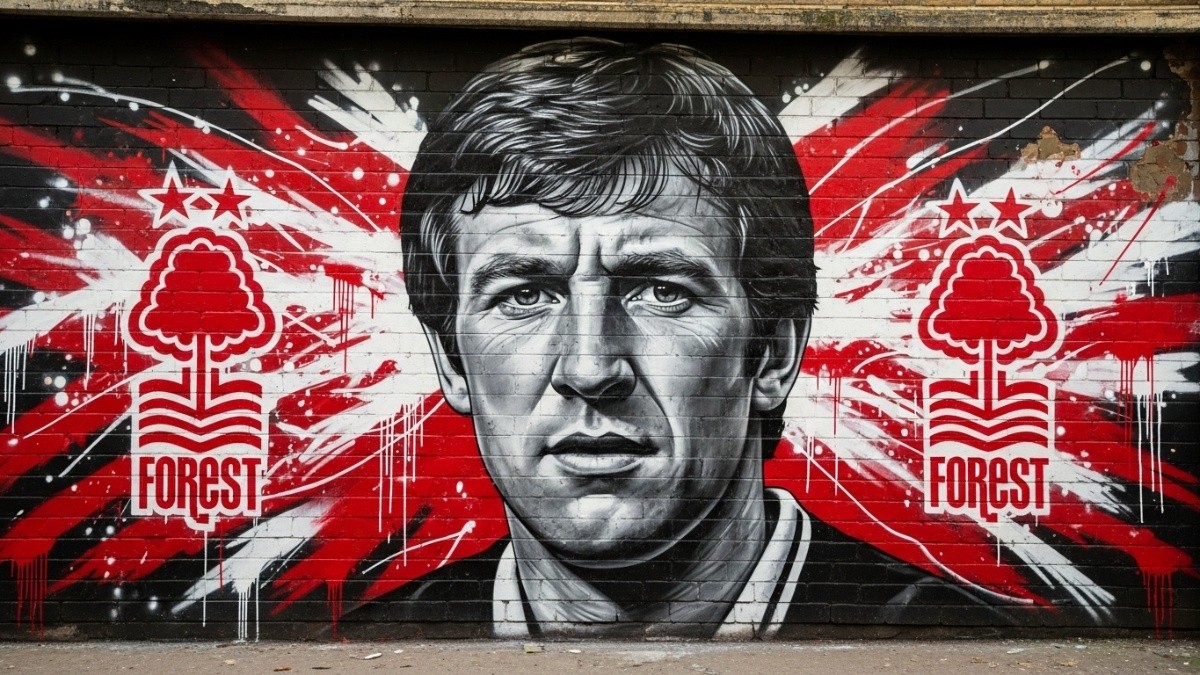
John Robertson, the Scottish winger who delivered two European Cups to Nottingham Forest and earned Brian Clough’s immortal praise as ‘the Picasso of our game’, has died at the age of 72.
Football lost one of its most magical figures on Christmas Day. John Robertson, the Scottish winger who helped Nottingham Forest conquer Europe twice, has died at the age of 72.
The club announced the news in a statement filled with grief: “We are heartbroken to announce the passing of Nottingham Forest legend and dear friend, John Robertson. A true great of our club and a double European Cup winner, John’s unrivalled talent, humility and unwavering devotion to Nottingham Forest will never ever be forgotten.”
From outcast to artist
Robertson’s story is one of football’s greatest redemptions. When Brian Clough arrived at the City Ground in January 1975, he found a player languishing on the transfer list, overweight and seemingly without a future. In his autobiography, Clough famously described his first impression: a “scruffy, unfit, uninterested waste of time.”
Yet Clough saw something others had missed. He moved Robertson from central midfield to the left wing, gave him freedom and purpose, and watched him transform into what the legendary manager would call “the Picasso of our game.”
“If one day I felt a bit off colour, I would sit next to him. I was bloody Errol Flynn in comparison,” Clough once quipped. “But give him a ball and a yard of grass, and he was an artist.”
The architect of glory
Robertson was the heartbeat of Forest’s astonishing rise from the Second Division to the summit of European football. In 1979, in Munich, his perfectly weighted cross found Trevor Francis for the header that beat Malmö and delivered Forest’s first European Cup.
Twelve months later in Madrid, Robertson did it himself. His goal against Hamburg secured a 1-0 victory at the Santiago Bernabéu, making Forest back-to-back European champions — a feat no English club had achieved before.
His former teammate Martin O’Neill offered a powerful assessment: “He was the most influential player in Europe for maybe three-and-a-half to four years.” Captain John McGovern went further, comparing him to Ryan Giggs but “with two good feet, not one.”
A legacy beyond the pitch
Robertson earned 28 caps for Scotland, including appearances at the 1978 and 1982 World Cups. He famously scored the winning goal against England at Wembley in 1981.
After hanging up his boots, he remained devoted to the game as assistant manager to Martin O’Neill at Leicester City, Celtic, and Aston Villa. But it is at Nottingham Forest where his legend will forever live.
In a 2015 poll by the Nottingham Post, supporters voted Robertson their greatest player of all time. The club’s farewell message captured what he meant to them: “Rest in Peace, Robbo… Our greatest.”
Robertson himself once reflected on his relationship with Clough: “I knew he liked me but I loved him. I wouldn’t have had a career without him.”
Football’s Picasso has painted his last masterpiece. The canvas at the City Ground will forever bear his colours.

John Robertson, the Scottish winger who delivered two European Cups to Nottingham Forest and earned Brian Clough’s immortal praise as ‘the Picasso of our game’, has died at the age of 72.
Football lost one of its most magical figures on Christmas Day. John Robertson, the Scottish winger who helped Nottingham Forest conquer Europe twice, has died at the age of 72.
The club announced the news in a statement filled with grief: “We are heartbroken to announce the passing of Nottingham Forest legend and dear friend, John Robertson. A true great of our club and a double European Cup winner, John’s unrivalled talent, humility and unwavering devotion to Nottingham Forest will never ever be forgotten.”
From outcast to artist
Robertson’s story is one of football’s greatest redemptions. When Brian Clough arrived at the City Ground in January 1975, he found a player languishing on the transfer list, overweight and seemingly without a future. In his autobiography, Clough famously described his first impression: a “scruffy, unfit, uninterested waste of time.”
Yet Clough saw something others had missed. He moved Robertson from central midfield to the left wing, gave him freedom and purpose, and watched him transform into what the legendary manager would call “the Picasso of our game.”
“If one day I felt a bit off colour, I would sit next to him. I was bloody Errol Flynn in comparison,” Clough once quipped. “But give him a ball and a yard of grass, and he was an artist.”
The architect of glory
Robertson was the heartbeat of Forest’s astonishing rise from the Second Division to the summit of European football. In 1979, in Munich, his perfectly weighted cross found Trevor Francis for the header that beat Malmö and delivered Forest’s first European Cup.
Twelve months later in Madrid, Robertson did it himself. His goal against Hamburg secured a 1-0 victory at the Santiago Bernabéu, making Forest back-to-back European champions — a feat no English club had achieved before.
His former teammate Martin O’Neill offered a powerful assessment: “He was the most influential player in Europe for maybe three-and-a-half to four years.” Captain John McGovern went further, comparing him to Ryan Giggs but “with two good feet, not one.”
A legacy beyond the pitch
Robertson earned 28 caps for Scotland, including appearances at the 1978 and 1982 World Cups. He famously scored the winning goal against England at Wembley in 1981.
After hanging up his boots, he remained devoted to the game as assistant manager to Martin O’Neill at Leicester City, Celtic, and Aston Villa. But it is at Nottingham Forest where his legend will forever live.
In a 2015 poll by the Nottingham Post, supporters voted Robertson their greatest player of all time. The club’s farewell message captured what he meant to them: “Rest in Peace, Robbo… Our greatest.”
Robertson himself once reflected on his relationship with Clough: “I knew he liked me but I loved him. I wouldn’t have had a career without him.”
Football’s Picasso has painted his last masterpiece. The canvas at the City Ground will forever bear his colours.