



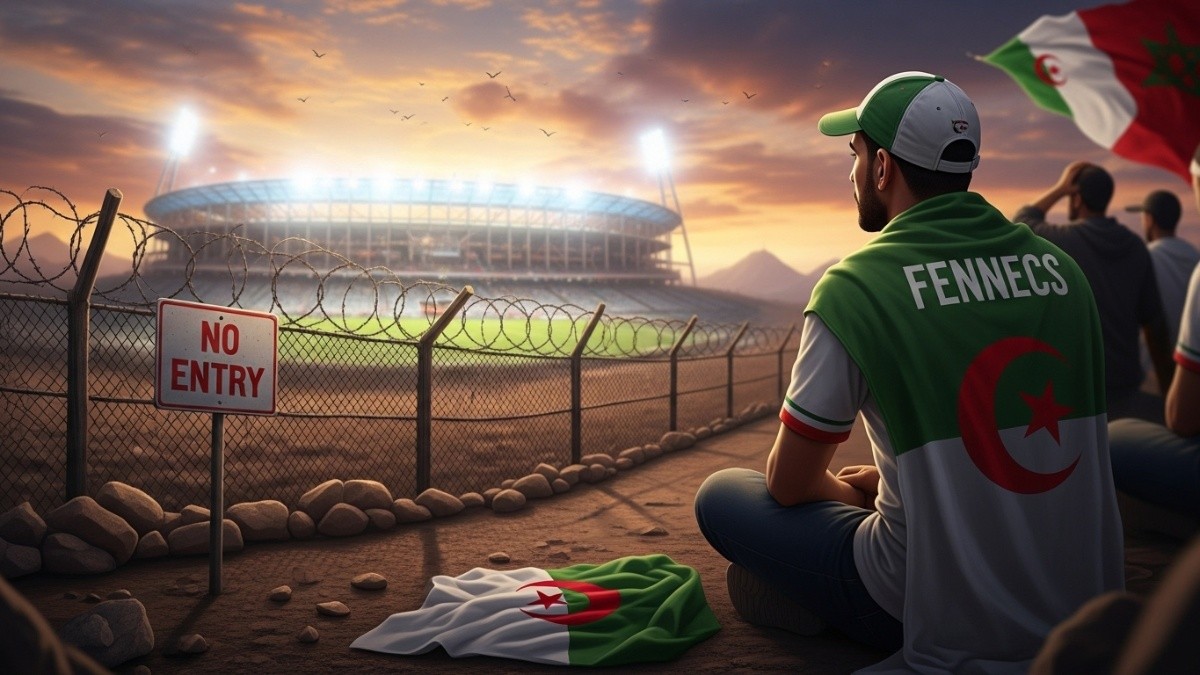
With closed borders, no direct flights, and travel costs exceeding €600, thousands of Algerian fans are unable to support the Fennecs at AFCON 2025 in neighboring Morocco.
Closed borders, no direct flights
The geopolitical tension between Algeria and Morocco has created an unprecedented situation for Algerian fans. Since 2021, land borders have been closed and Moroccan airspace has been blocked to Algerian aircraft, meaning there are absolutely no direct travel options between the two neighboring countries.
For fans wanting to support the Fennecs, this means mandatory stopovers through third countries. The most common route goes via Tunisia, but alternatives include France, Spain, or even Turkey. What would normally be a short regional trip has become a logistical nightmare.
Sky-high travel costs
The financial burden is staggering. A one-way ticket from Algiers to Rabat via Tunis with Tunisair costs around €400-560, with several hours of layover. For fans wanting to attend all of Algeria’s group stage matches, the round-trip bill can reach €600 to €1,460.
To put this in perspective, Algeria’s official foreign currency allowance for travelers is capped at €750. This means many supporters would need to spend nearly their entire travel allowance just on flights, leaving little for accommodation, match tickets, and other expenses.
E-visa requirement adds confusion
Since September 2025, Morocco has introduced a new Electronic Travel Authorization (ETA) for supporters from eight African nations, including Algeria, Tunisia, Senegal, and Burkina Faso. The authorization must be obtained through the official Yalla app before travel.
While the e-visa is completely free for AFCON 2025 attendees, the new requirement has created opportunities for exploitation. Some unscrupulous travel agencies in Algeria have attempted to charge exorbitant fees for “facilitating” the application process, prompting CAF and the Local Organizing Committee to issue clarifications reminding fans that the authorization costs nothing.
According to one Algerian travel agency owner currently in Morocco, between 10,000 and 15,000 Algerian supporters were unable to make the trip for the Fennecs’ opening match against Sudan due to e-visa refusals and ticket unavailability.
The diaspora steps up
With travel from Algeria so complicated, it’s the Algerian diaspora in Europe that has filled the void. Moroccan media reports describe long queues of European-registered vehicles at the Ceuta and Melilla crossing points, as Algerian communities from France and Spain make their way to support the national team.
These fans are traveling by ferry from southern Spain with their cars, entering Morocco through the Spanish enclaves. It’s a creative solution that highlights both the passion of Algerian football supporters and the absurdity of the current geopolitical situation.
When politics overshadows football
The situation perfectly illustrates how political tensions can directly impact sport. While AFCON is meant to be a celebration of African football unity, thousands of Algerian fans are paying the price for diplomatic disputes that have nothing to do with the beautiful game.
Algeria opened their campaign with an emphatic 3-0 victory over Sudan on December 24, with captain Riyad Mahrez scoring twice. The team will face Burkina Faso on December 28 and Equatorial Guinea on December 31 in Rabat.
For many Algerian supporters watching from home, the irony is painful: their team is playing just across the border, in a country they could reach in hours under normal circumstances, yet the journey has become nearly impossible for ordinary fans.
A tale of two fan experiences
The contrast with other supporters at AFCON 2025 is stark. Moroccan fans can simply drive to stadiums across their country. Egyptian, Nigerian, and Ivorian supporters face typical travel challenges but nothing approaching the systematic barriers facing Algerians.
As the tournament progresses, the Algerian team’s success on the pitch may be celebrated more loudly in Paris, Marseille, and Lyon than in the Rabat stadium stands. It’s a bittersweet reality for a nation with one of Africa’s most passionate football cultures.

With closed borders, no direct flights, and travel costs exceeding €600, thousands of Algerian fans are unable to support the Fennecs at AFCON 2025 in neighboring Morocco.
Closed borders, no direct flights
The geopolitical tension between Algeria and Morocco has created an unprecedented situation for Algerian fans. Since 2021, land borders have been closed and Moroccan airspace has been blocked to Algerian aircraft, meaning there are absolutely no direct travel options between the two neighboring countries.
For fans wanting to support the Fennecs, this means mandatory stopovers through third countries. The most common route goes via Tunisia, but alternatives include France, Spain, or even Turkey. What would normally be a short regional trip has become a logistical nightmare.
Sky-high travel costs
The financial burden is staggering. A one-way ticket from Algiers to Rabat via Tunis with Tunisair costs around €400-560, with several hours of layover. For fans wanting to attend all of Algeria’s group stage matches, the round-trip bill can reach €600 to €1,460.
To put this in perspective, Algeria’s official foreign currency allowance for travelers is capped at €750. This means many supporters would need to spend nearly their entire travel allowance just on flights, leaving little for accommodation, match tickets, and other expenses.
E-visa requirement adds confusion
Since September 2025, Morocco has introduced a new Electronic Travel Authorization (ETA) for supporters from eight African nations, including Algeria, Tunisia, Senegal, and Burkina Faso. The authorization must be obtained through the official Yalla app before travel.
While the e-visa is completely free for AFCON 2025 attendees, the new requirement has created opportunities for exploitation. Some unscrupulous travel agencies in Algeria have attempted to charge exorbitant fees for “facilitating” the application process, prompting CAF and the Local Organizing Committee to issue clarifications reminding fans that the authorization costs nothing.
According to one Algerian travel agency owner currently in Morocco, between 10,000 and 15,000 Algerian supporters were unable to make the trip for the Fennecs’ opening match against Sudan due to e-visa refusals and ticket unavailability.
The diaspora steps up
With travel from Algeria so complicated, it’s the Algerian diaspora in Europe that has filled the void. Moroccan media reports describe long queues of European-registered vehicles at the Ceuta and Melilla crossing points, as Algerian communities from France and Spain make their way to support the national team.
These fans are traveling by ferry from southern Spain with their cars, entering Morocco through the Spanish enclaves. It’s a creative solution that highlights both the passion of Algerian football supporters and the absurdity of the current geopolitical situation.
When politics overshadows football
The situation perfectly illustrates how political tensions can directly impact sport. While AFCON is meant to be a celebration of African football unity, thousands of Algerian fans are paying the price for diplomatic disputes that have nothing to do with the beautiful game.
Algeria opened their campaign with an emphatic 3-0 victory over Sudan on December 24, with captain Riyad Mahrez scoring twice. The team will face Burkina Faso on December 28 and Equatorial Guinea on December 31 in Rabat.
For many Algerian supporters watching from home, the irony is painful: their team is playing just across the border, in a country they could reach in hours under normal circumstances, yet the journey has become nearly impossible for ordinary fans.
A tale of two fan experiences
The contrast with other supporters at AFCON 2025 is stark. Moroccan fans can simply drive to stadiums across their country. Egyptian, Nigerian, and Ivorian supporters face typical travel challenges but nothing approaching the systematic barriers facing Algerians.
As the tournament progresses, the Algerian team’s success on the pitch may be celebrated more loudly in Paris, Marseille, and Lyon than in the Rabat stadium stands. It’s a bittersweet reality for a nation with one of Africa’s most passionate football cultures.