


Summary
Fatigue in boxing often comes from tension and inefficiency. Holding your breath, over-swinging punches, and rushing combinations drain energy fast. Poor footwork and posture also force your muscles to work harder than necessary.
It’s a compilation of pacing, breathing, movement efficiency, and smart training habits. Many boxers fade not because they are weak, but because they waste energy early or lack conditioning specific to boxing.
Understanding why you get tired is the first step to lasting longer. Boxing rewards calmness, rhythm, and efficiency more than raw output.
This guide explains how to build stamina for boxing, stay composed under pressure, and maintain performance round after round using proven training methods and drills.
Key Takeaways
- Boxing endurance comes from efficient movement, breathing control, and sport-specific conditioning.
- Learning how to pace yourself during rounds helps prevent early fatigue.
- Simple drills, such as interval skipping, shadowboxing rounds, and controlled sparring, build real fight stamina.
1) Improve Your Breathing Control
Breathing is one of the most overlooked aspects of boxing endurance. Many boxers hold their breath during exchanges without realizing it.
A simple habit is to exhale lightly with every punch and breathe steadily between combinations. This keeps oxygen flowing and reduces tension.
Drills to try:
- Shadowbox for three rounds while focusing on slow nasal breathing.
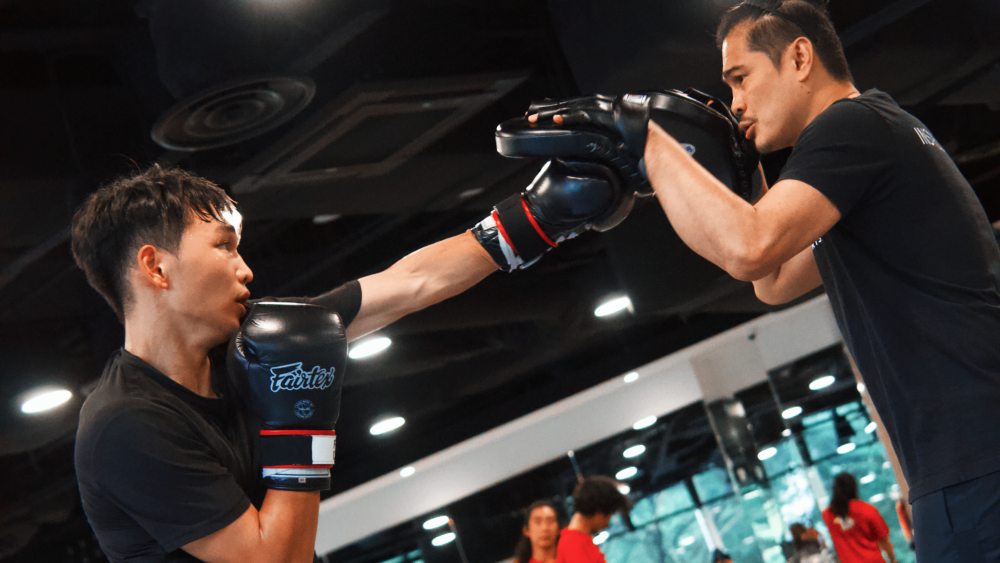
- Practice light padwork and consciously exhale on each punch.
- Try diaphragmatic breathing drills during rest rounds.
2) Build Cardio That Matches Boxing Rounds
Running long distances helps general fitness, but boxing requires short bursts of high-intensity followed by brief recovery periods. Your conditioning should reflect that. Interval-based training prepares your body for round-by-round demands.
Drills to try:
- Jump rope intervals, 3 minutes on and 1 minute off.
- Sprint intervals, 20 to 30 seconds fast followed by 30 seconds slow.
- Heavy bag rounds at a moderate pace, focusing on rhythm.
3) Learn How To Pace Yourself
Many boxers start too fast and burn out early. Throwing every punch at full power isn’t sustainable.
Pacing means choosing when to press and when to recover. Smart boxers vary intensity, using movement and jabs to control tempo.
Drills to try:
- Shadowbox one round at 60 percent intensity and one round at 80 percent.
- Bag rounds where you throw light combinations for 30 seconds, then harder shots for 15 seconds.
- Sparring rounds focused on movement and defense only.
4) Improve Your Footwork Efficiency
Poor footwork wastes energy. Crossing feet, bouncing too much, or staying tense makes movement exhausting.
Efficient footwork keeps you balanced and relaxed, allowing you to move without draining stamina.
Drills to try:
- Boxing step drills across the floor.
- Circle shadowboxing while maintaining stance.
- Light sparring with emphasis on movement instead of punching.
5) Strengthen Your Boxing Muscles
Stronger muscles fatigue more slowly. Boxing-specific strength training improves endurance and posture during later rounds.
Focus on exercises that support punching and movement rather than heavy lifting alone.
Exercises to include:
6) Condition Your Mind To Stay Calm
Mental fatigue often appears before physical fatigue. Anxiety, frustration, or panic accelerates exhaustion.
Staying calm allows you to breathe properly, think clearly, and conserve energy.
Drills to try:
- Controlled sparring with light contact.
- Shadowboxing with music to relax the rhythm.
- Visualization of long rounds before training.
Combat sport is as much mental as it is physical battle. Mental conditioning helps you stay composed when tired.
7) Recover Properly Between Rounds
Recovery is part of endurance. What you do between rounds matters.
Sit down, slow your breathing, and relax your shoulders. Avoid talking too much or pacing unnecessarily.
Practicing recovery during training prepares you for real rounds.
FAQs On Lasting Longer Between Boxing Rounds
Q: How Long Does It Take To Build Boxing Endurance
A: With consistent training, noticeable improvements can appear within four to six weeks.
Q: Should I Run To Improve Boxing Stamina
A: Running helps, but interval training and boxing-specific drills are more effective.
Q: Is Skipping Rope Good For Endurance?
A: Yes. It improves coordination, rhythm, and cardiovascular fitness.
Q: Why Do My Arms Feel Heavy During Later Rounds?
A: This usually comes from tension and poor breathing rather than lack of strength.
Final Thoughts
Lasting more rounds in boxing is about working smarter, not just harder. By improving breathing, pacing, footwork, and conditioning, you can stay strong and composed deep into each session. Endurance grows when you train with intention, but preservation helps you to last through the rounds. Over time, what once felt exhausting becomes controlled, allowing you to box with confidence from the opening bell to the final round.
You may also like:
Breaking Down How AJ Secured A Sixth Round Knockout Over Jake Paul

Summary Over the weekend, in the boxing scene, Anthony Joshua delivered a decisive statement performance by stopping Jake Paul with a knockout in round six. The bout unfolded as a clash between elite heavyweight fundamentals…
Summary In boxing culture, people often describe a fighter as ‘durable’ when they can stay calm under pressure and continue performing even in tough rounds. The real meaning of durability is not allowing punches to…
Summary In recent years, celebrity boxing and crossover fights have become common. Fans enjoy high-profile matchups, unusual pairings, and big personalities sharing the ring. Jake Paul has been at the center of this trend, taking…
Summary Ducking is a short, controlled lowering of your upper body to evade punches that come at head height, usually hooks or looping shots. Unlike slipping or leaning away, ducking keeps you close enough to…
Summary In Boxing, staying still makes you an easy target. Upper body movement helps you become unpredictable while keeping your guard intact. It connects directly to your offense, defense and counterpunching ability. Upper body movement…
Summary The L step is a movement pattern where you step diagonally backward and to the side, forming a “L” shape movement. It allows you to move off the centerline and create angles while maintaining…
Summary While Muay Thai is known for its kicks, punches, elbows, and knees, not all styles focus on long-range striking. The Muay Plam is a style that thrives in the clinch, where fighters stay chest…
Summary High-intensity training is known for pushing your heart rate up and delivering strong fitness results in a short amount of time. But many people who train consistently notice something else. Beyond physical benefits, many…
Summary Children learn best when they are curious, engaged, and free to explore. This is exactly why play-based learning works so well in martial arts training. Instead of relying only on repetition and structure, instructors…
Summary As more people look for ways to stay active, reconnect with nature, and step away from digital routines, 2026 offers many exciting outdoor activities to explore. From scenic walks and coastal adventures to team-based…
Summary Technical mastery in MMA doesn’t just rely on power. It’s also about timing, positioning, adaptability, and the ability to solve problems in real time. A technical fighter understands distance, timing, and transitions. They know…
Summary Scrambles are one of the most dynamic and unpredictable parts of wrestling. A scramble in wrestling occurs when both athletes lose or exchange control and must react quickly to regain dominant position. These moments…